
Lloyd’s Register forms Maritime Nuclear Consortium to set international standards
January 21, 2026, 10:25AMNuclear News
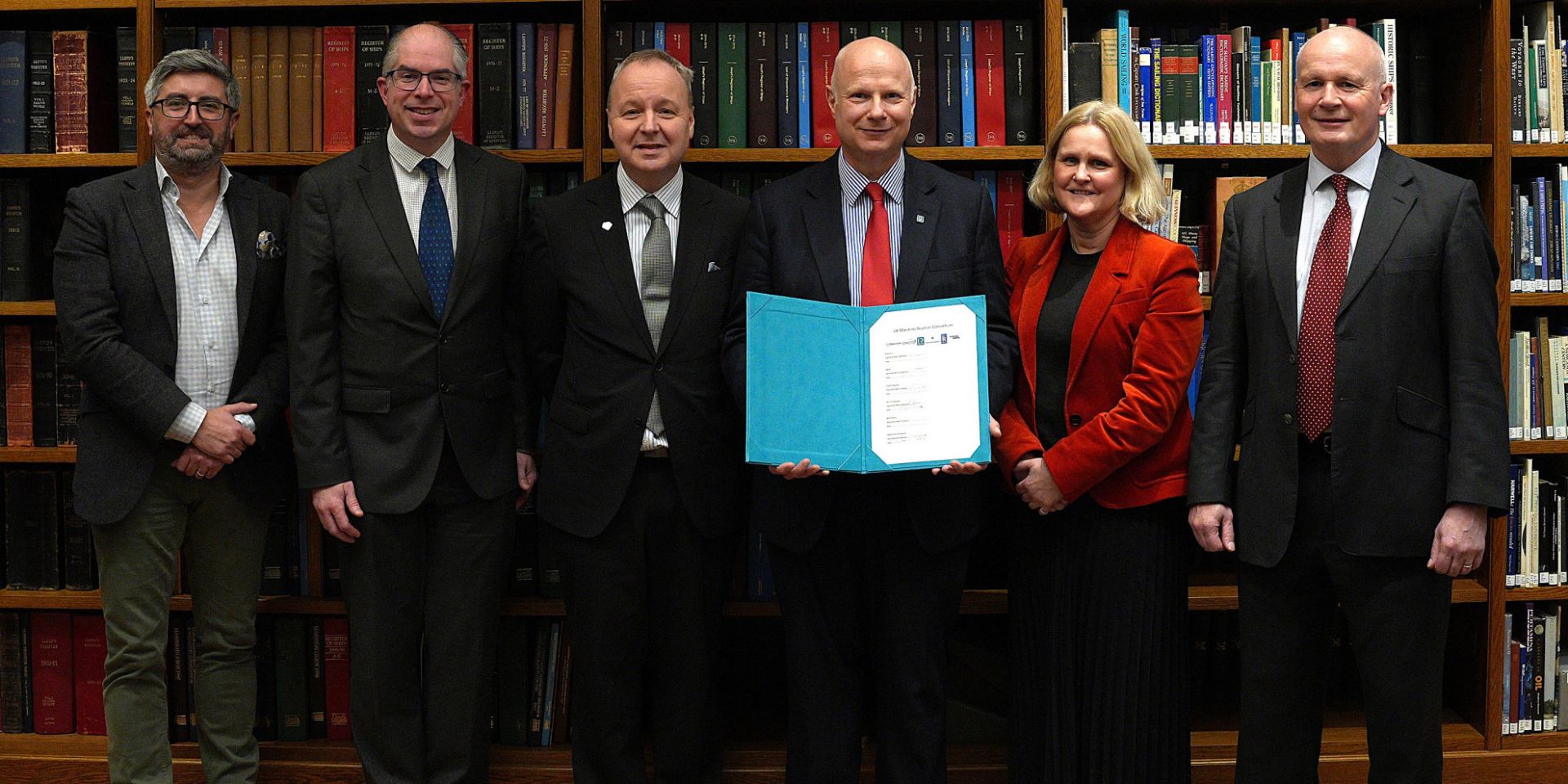
Representatives of the founding members of the Maritime Nuclear Consortium. From left, Nick Tomkinson, Global Nuclear Security Partners; Simon Williams, Rolls-Royce; Blair Jamieson, Babcock International Group; Mark Tipping, Lloyd’s Register; Kirsti Massie, Stephenson Harwood; and Mike Salthouse, NorthStandard. (Photo: Lloyd’s Register)
London-based professional services organization and maritime classification society Lloyd’s Register has brought together a group of experts from the U.K. nuclear, maritime, insurance, and regulatory sectors with the primary goal of establishing international standards “for safe, secure, and commercially viable nuclear-powered ships.”
This Maritime Nuclear Consortium includes Lloyd’s Register as the group’s lead, safety administrator, and secretariat; Rolls-Royce, specializing in advanced reactor design; Babcock International Group (ship design, construction, and support); Global Nuclear Security Partners (security and safeguards); Stephenson Harwood (legal and regulatory issues); and NorthStandard (insurance).
Tags:
Share:
 The U.K. government last week issued a “